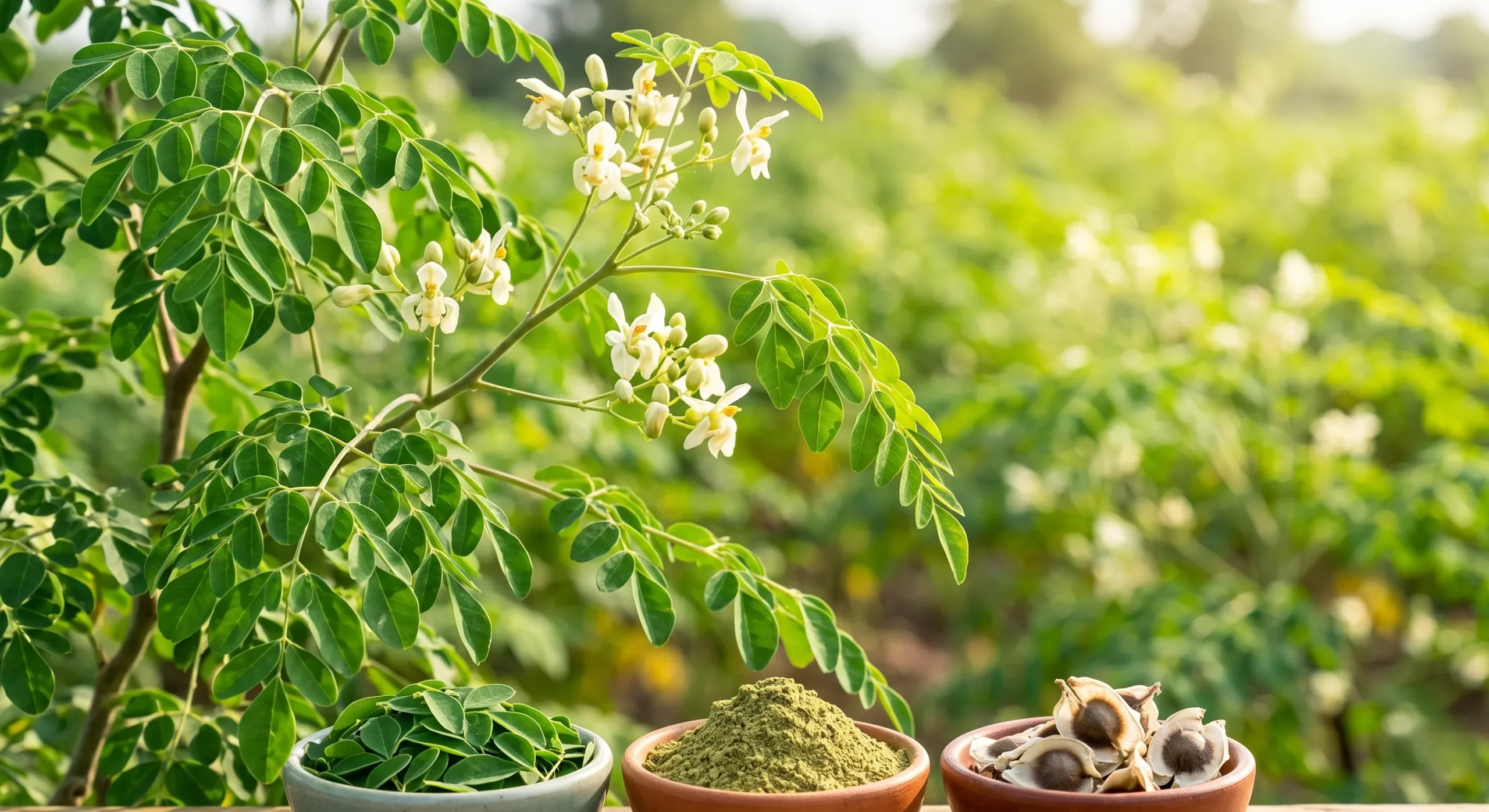
Understanding Potency, Polyphenols, and What’s Best for You
Moringa oleifera, often referred to as the “Miracle Tree,” has been utilized for centuries in traditional medicine systems like Ayurveda. Modern science has corroborated many of these traditional uses, demonstrating that Moringa leaves are dense with essential vitamins, minerals, amino acids, and powerful antioxidants. For modern consumers, encapsulating these benefits is the most convenient way to incorporate Moringa into a daily wellness routine.
However, as you browse options at swalys.com or your local health store, you will typically encounter two primary forms of supplements: Moringa Powder capsules and Moringa Extract capsules (often standardized to 10% polyphenols). While they originate from the same plant, they interact with the body differently. This article delves into the scientific and nutritional differences between the two.
1. What is Moringa Powder?
Moringa powder is created by shade-drying freshly harvested Moringa leaves and grinding them into a fine, bright green powder. This process preserves the physical leaf matrix. When you take a Moringa powder capsule, you are essentially consuming a whole food in a concentrated, dried form.
Nutrient Profile: It retains a broad spectrum of the plant’s natural profile, including insoluble dietary fiber, plant proteins, Vitamins A, C, and E, calcium, potassium, and iron.
Bioavailability: Because it retains the physical leaf structure and fiber, digestion mimics that of eating a vegetable. Nutrient release is steady.
Best For: Individuals looking for a “multivitamin” effect—a daily nutritional boost, general wellness, and filling dietary gaps.
2. What is Moringa Extract (10% Polyphenols)?
Moringa extract is not just crushed leaves. It is a highly concentrated preparation created by soaking Moringa leaves in a solvent (such as water or ethanol). This solvent isolates and pulls out specific bioactive medicinal compounds—like antioxidants, flavonoids, and polyphenols—while discarding the insoluble fiber and bulk plant material. The liquid is then evaporated, leaving behind a potent, targeted concentrate.
What does “10% Polyphenols” mean? Polyphenols are a category of plant compounds offering severe antioxidant and anti-inflammatory benefits. “10% Polyphenols” is a clinical standardisation. It guarantees that exactly 10% of the capsule’s weight consists of these active medicinal compounds (like chlorogenic acid and quercetin), ensuring consistent therapeutic potency in every dose.
Nutrient Profile: Extremely high in specific phytochemicals and antioxidants. It lacks the dietary fiber and some macro-nutrients of the whole leaf but magnifies the anti-inflammatory and metabolic compounds.
Bioavailability: The extraction process breaks down the plant cell walls, making the active compounds more readily accessible and rapidly absorbed by the digestive system.
Best For: Targeted therapeutic goals such as reducing systemic inflammation, managing blood sugar levels, or providing high-level antioxidant support against oxidative stress.
3. Direct Comparison: Powder vs. Extract
Feature
Moringa Whole-Leaf Powder
Moringa Extract (10% Polyphenols)
Processing
Leaves are dried and finely milled.
Bioactive compounds are selectively extracted and concentrated.
Composition
Contains the whole leaf matrix, including fiber, proteins, and minerals.
Requires a larger dose (more capsules) to achieve clinical levels of antioxidants.
Highly potent; fewer capsules required to achieve therapeutic antioxidant effects.
Standardization
Naturally variable depending on harvest season and soil quality.
Standardized (e.g., 10% polyphenols) for exact, reliable dosing every time.
Primary Goal
Broad daily nutrition and dietary support.
Targeted relief for inflammation, metabolic health, and immunity.
Which One Should You Choose?
The choice between Moringa powder and Moringa extract ultimately comes down to your health goals.
If your goal is to supercharge your daily nutrition, get more plant-based iron, calcium, and vitamins, and consume a pure, whole-food supplement, Moringa Powder capsules are the ideal choice.
If you are taking Moringa for a specific therapeutic purpose—such as combating joint inflammation, supporting cardiovascular health, or leveraging strong antioxidants for anti-aging and cellular health—Moringa Extract standardized to 10% polyphenols is vastly superior due to its concentrated dosage and clinical reliability.
For the ultimate wellness protocol, many consumers choose to use both: powder for foundational nutrition, and extract for targeted defense. Discover the right premium Moringa supplement for your needs at swalys.com.
Scientific References & Further Reading
Stohs, S. J., & Hartman, M. J. (2015). Review of the Safety and Efficacy of Moringa oleifera. Phytotherapy Research, 29(6), 796-804.
Mbikay, M. (2012). Therapeutic Potential of Moringa oleifera Leaves in Chronic Hyperglycemia and Dyslipidemia: A Review. Frontiers in Pharmacology, 3, 24.
Vergara-Jimenez, M., Almatrafi, M. M., & Fernandez, M. L. (2017). Bioactive Components in Moringa Oleifera Leaves Protect against Chronic Disease. Antioxidants, 6(4), 91.
Naturextrakte Bioscience. (2025). Moringa Extract vs Moringa Powder: Which One to Choose?
 Third-Party Lab Tested for Purity