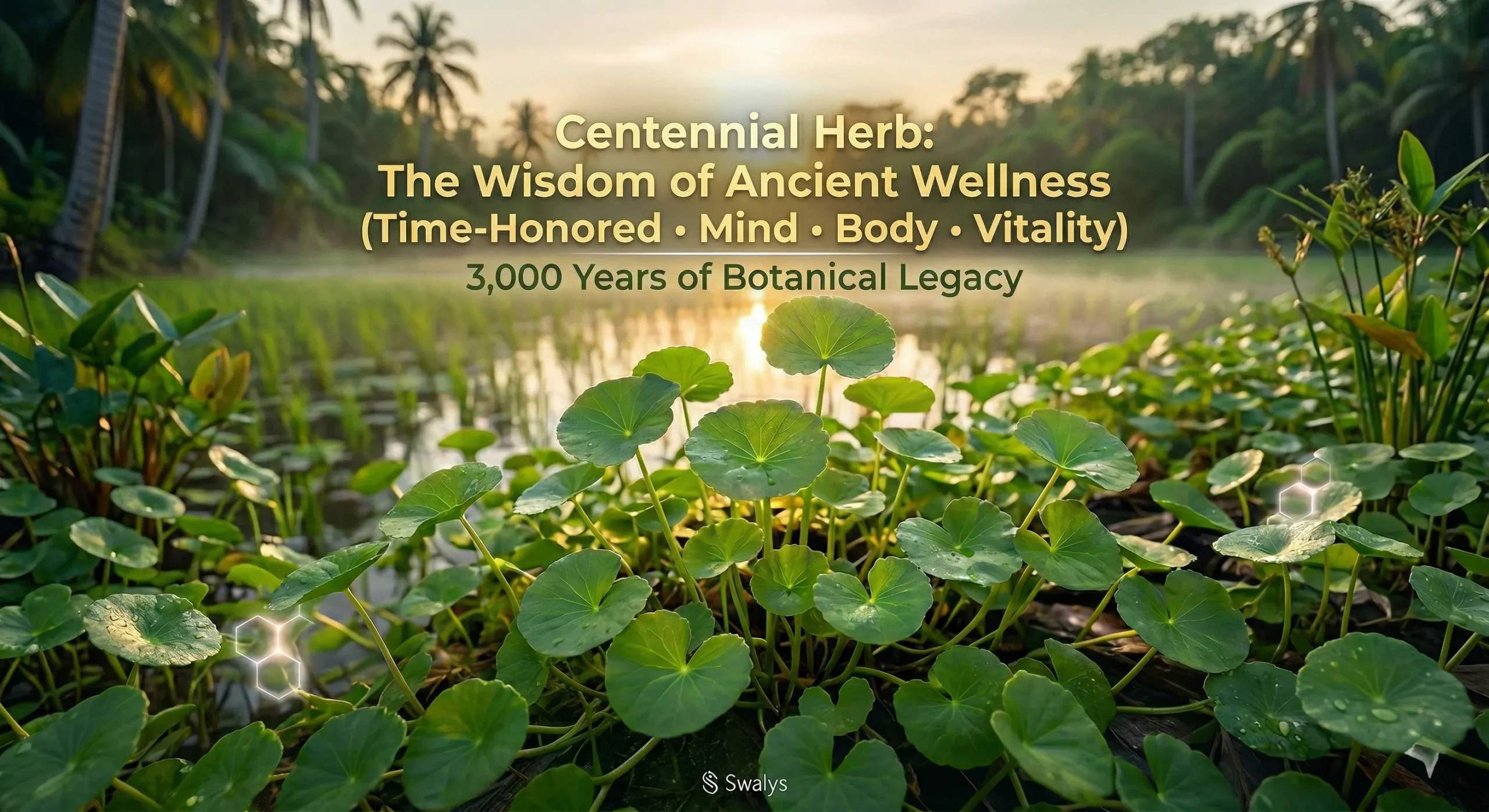
The ancient herb modern science is finally validating — from sharper minds to younger-looking skin.
Hidden in the wetlands of India, Sri Lanka, and Southeast Asia grows a small, unassuming creeping plant that has quietly been one of medicine’s best-kept secrets for over 3,000 years.
Called Centella asiatica in science, and Gotu Kola in the world of wellness, this herb is listed in ancient Ayurvedic texts and revered in Traditional Chinese Medicine as one of the “miracle elixirs of life.” Today, a growing body of peer-reviewed research is catching up with what healers have known for centuries. At Swalys, we believe wellness begins with knowledge — so here’s your complete, research-backed guide to 10 things Gotu Kola can do for your body and mind.
The Science Behind the Herb
Gotu Kola’s power comes from a unique family of bioactive compounds called triterpenoids (also known as saponins). These molecules are responsible for most of the herb’s therapeutic activity:
Perhaps Gotu Kola’s most celebrated benefit is its effect on the brain. Long called a “brain tonic” in Ayurvedic tradition, modern research is beginning to confirm why.
A clinical trial on post-stroke patients found that Gotu Kola extract (750–1,000 mg daily) improved cognitive scores at a level comparable to folic acid, and was actually more effective, specifically in the memory domain. A 2022 study found that Gotu Kola supplementation improved cognitive performance and reduced oxidative stress in participants, while a 2023 study reported improvements in attention, memory, and mood compared to placebo groups.
Even Oregon Health & Science University (OHSU) launched a clinical trial in 2023 to investigate its effects on Alzheimer’s biomarkers in adults with mild cognitive impairment — a significant moment in legitimising this ancient herb.
The mechanism? Gotu Kola’s triterpenoids appear to increase the length of dendrites and enhance neural connectivity in the hippocampus — the brain’s memory centre — while also reducing neuroinflammation.
💡Swalys tip: Look for standardised Gotu Kola extract containing at least 40% asiaticoside for cognitive support. Typical doses used in studies range from 500–1,000 mg daily.
2. It Calms Anxiety
Without Sedation, clinically studied
In a world increasingly reaching for natural solutions to stress, Gotu Kola stands out. It works differently from most anxiolytic herbs — rather than simply sedating the nervous system, it binds to cholecystokinin (CCK) receptors, which are directly involved in the neurochemistry of fear and anxiety.
A double-blind, placebo-controlled human study published in the Journal of Clinical Psychopharmacology showed that a single oral dose of Gotu Kola significantly reduced the acoustic startle response — a validated measure of anxiety — within 30 to 60 minutes, with no effect on heart rate or blood pressure. In other words, it reduced anxiety without any sedative “foggy” feeling.
A separate 60-day trial in which participants replaced their antidepressant with Gotu Kola saw self-reported reductions in stress, anxiety, and depression. Researchers link this to its effects on the hypothalamic-pituitary-adrenal (HPA) axis — the body’s central stress regulation system.
💡Swalys tip: For anxiety support, studies used 500 mg twice daily. Gotu Kola is considered an adaptogen — it doesn’t force calm, it helps your body find its own balance.
3. It Supercharges Collagen and Skin Rejuvenation.
Strong evidence in dermatology
Collagen is the scaffolding of your skin — and Gotu Kola is one of the most potent natural collagen boosters known to science. Its key compound, asiaticoside, has been shown to stimulate Type I collagen synthesis in human dermal fibroblasts, the cells responsible for building and maintaining your skin’s structure. Type I collagen is the most abundant in connective tissue and is what gives skin its firmness and elasticity.
Clinical research shows that women with sun-damaged skin who applied a Gotu Kola extract for six months experienced significant improvement in skin firmness, elasticity, and hydration. The herb also downregulates enzymes that break down collagen (like MMP-1), effectively protecting existing collagen while building new supplies.
This dual action — building and protecting collagen — is why Gotu Kola has become one of the most sought-after ingredients in evidence-based skincare, often appearing alongside retinol and vitamin C in premium formulations.
💡Swalys tip: Gotu Kola works both topically (creams and serums) and internally (capsules). Using both together may offer synergistic benefits for anti-ageing skin care.
4. It Dramatically Accelerates Wound Healing
Used in clinical wound care
Gotu Kola’s wound-healing ability is so well-established that it is used in pharmaceutical-grade wound dressings and post-surgical ointments in several countries. Research published in a 2024 PMC review confirmed that its active compounds — asiaticoside and madecassoside — enhance collagen synthesis, modulate inflammation, and stimulate the formation of new blood vessels (angiogenesis) at the wound site.
Studies show it speeds up the process of epithelialisation (the migration of skin cells to cover the wound), increases tissue granulation, and even reduces dryness, itching, and scar formation in burn patients when applied as a 3% cream — outperforming silver sulfadiazine, the standard medical treatment, in some metrics.
A 2025 pilot study also found that a standardised Centella extract significantly reduced pain and improved jaw function in patients with temporomandibular joint inflammation.
It’s worth noting that Gotu Kola has a nuanced relationship with collagen at wound sites — it can both stimulate synthesis where healing is needed and inhibit overproduction that leads to keloid or hypertrophic scarring.
💡Swalys tip: For post-surgery or burn support, topical preparations containing Madecassol (a Gotu Kola extract) have the most clinical backing. Always consult your healthcare provider.
5. It Improves Blood Circulation and Leg Health.
Significant clinical evidence
Chronic venous insufficiency (CVI) — where blood struggles to travel back from the legs to the heart — causes swelling, heaviness, varicose veins, and leg pain. Gotu Kola is one of the most studied natural interventions for this condition, with enough evidence that it was accepted as a pharmaceutical drug in France as far back as the 1880s.
A double-blind, placebo-controlled study of 94 people with venous insufficiency found that taking 60–120 mg of Gotu Kola extract daily for two months measurably improved microcirculatory parameters and reduced ankle swelling. The mechanism: its triterpenoids support blood vessel integrity and reduce capillary permeability — essentially strengthening the walls of veins so fluid doesn’t leak into surrounding tissue.
Research also suggests it may help in people with diabetic microangiopathy (damage to small blood vessels from diabetes), with 6–12 months of use showing improvements in circulation and reductions in fluid retention.
💡Swalys tip: Doses of 60–120 mg standardised extract daily for 4–8 weeks are commonly used in CVI clinical trials. The specific extract “Centellase” has been studied most extensively.
6. It Protects the Brain from Age-Related Decline.
Emerging frontier research
Beyond general cognitive support, Gotu Kola shows remarkable promise in the field of neurodegenerative disease prevention. Lab studies found that Gotu Kola extract had a positive effect on behavioural abnormalities in mice with Alzheimer’s disease. Asiatic acid, one of its key compounds, appears to protect brain cells from beta-amyloid toxicity — the sticky protein plaques that are a hallmark of Alzheimer’s pathology.
A 2024 study from Oregon Health & Science University found that a Centella water extract improved memory in older mice and significantly reduced anxiety behaviour — with sex-based differences suggesting the herb’s mechanism is nuanced and dose-dependent.
A separate 2024 animal study showed that triterpenes like madecassoside and asiaticoside produced antidepressant-like effects through anti-inflammatory and neuro-enhancing signalling pathways.
OHSU researchers note that Gotu Kola may support anti-aging and has a broad range of therapeutic effects, including neuroprotective, antioxidant, and cardioprotective activities — an impressive portfolio for a single plant.
💡Swalys tip: Human clinical trials for Alzheimer’s are underway, but results are pending. Current evidence is strongest from animal and in vitro studies — promising, but not yet definitive for Alzheimer’s treatment.
7. It’s a Powerful Antioxidant
In vitro & in vivo evidence
Free radicals — unstable molecules generated by stress, pollution, processed foods, and even normal metabolism — damage cells, accelerate ageing, and increase risk of chronic disease. Gotu Kola’s triterpenoids and flavonoids have demonstrated significant antioxidant activity in both laboratory and animal studies, scavenging free radicals and reducing markers of oxidative stress.
A clinical trial published in PMC found that Gotu Kola supplementation combined with exercise significantly reduced 8-iso-prostaglandin F2α — a validated biomarker of oxidative damage — and lowered TNF-α (a pro-inflammatory cytokine) in older adults with mild cognitive impairment.
This suggests Gotu Kola may offer compounding benefits when combined with regular physical activity. Its antioxidant properties also extend to the skin, where it may help protect against UV-induced damage and support a more youthful complexion by reducing the oxidative breakdown of collagen.
💡Swalys tip: Gotu Kola’s antioxidant benefits complement a diet rich in other polyphenols. Pair it with berries, green tea, and turmeric for a comprehensive antioxidant approach.
8. It May Lift Your Mood
Promising early evidence
Beyond anxiety, Gotu Kola is being researched for its potential antidepressant effects. A study involving 33 individuals with generalised anxiety disorder found that after 60 days on Gotu Kola (in place of their antidepressant medication), participants self-reported significant reductions in stress, anxiety, and depression.
These findings are early-stage and should not be read as a recommendation to replace prescribed medications. A 2024 animal study found that triterpenes from Gotu Kola reduced hopelessness in behavioural tests — a proxy measure for depression — through anti-inflammatory and neuro-enhancing pathways. The herb appears to modulate neuroinflammatory signalling in the brain, which may underlie depressive symptoms in some people.
Researchers at Oregon Health & Science University noted that while Gotu Kola improved anxiety and memory in older mice, depressive symptoms were unaffected — underlining the complexity of mood disorders and the need for more human data.
💡Swalys tip:Important: Never stop or replace antidepressant medication without consulting your doctor. Gotu Kola may be a useful complementary tool, but it is not a standalone treatment for clinical depression.
9. It Fights Chronic Inflammation
Multi-pathway anti-inflammatory
Chronic low-grade inflammation is increasingly recognised as the root driver of many modern diseases — from arthritis and heart disease to metabolic syndrome and even depression. Gotu Kola works through multiple anti-inflammatory pathways simultaneously. Its compound madecassoside suppresses interleukin-related inflammation responses, while asiaticoside reduces the synthesis of pro-inflammatory cytokines TNF-α and IL-6.
A remarkable 2024 preclinical study showed that asiatic acid specifically induces ferroptosis — a form of programmed cell death — in arthritis-causing cells, reducing pro-inflammatory activity in joints. A 2025 pilot study further found that a standardised Centella extract relieved pain and improved function in patients with temporomandibular joint (jaw) inflammation, significantly better than a placebo.
A small clinical trial also found that Gotu Kola decreased joint discomfort and improved finger movement in women with scleroderma, an autoimmune condition involving inflammation and hardening of connective tissue.
💡Swalys tip: For inflammatory conditions, Gotu Kola may work best as part of a broader anti-inflammatory lifestyle that includes an omega-3-rich diet, regular movement, and stress management.
10. It Supports Digestive and Gut Health
Traditional use backed by preclinical evidence
Used for centuries in Ayurvedic medicine for digestive complaints, Gotu Kola’s gut health benefits are gaining attention in modern research. Studies show it can help treat gastric ulcers by strengthening the gastric mucosal barrier — the protective lining of the stomach — while its antioxidant activity reduces inflammation in the gut lining. This is particularly relevant given the modern epidemic of stress-induced gut permeability (“leaky gut”).
Its anti-inflammatory compounds also appear to have a protective effect on the liver, with preclinical research noting hepatoprotective properties. Traditional Ayurvedic practitioners have long used it to treat diarrhea, indigestion, and liver conditions, and while more rigorous human trials are needed, the early data provide a solid biological rationale for these traditional applications.
As an adaptogen, Gotu Kola’s broader stress-regulating effects may also indirectly support gut health, given the well-established gut-brain axis connection — where psychological stress directly impacts digestion and gut microbiome composition.
💡Swalys tip: For gut support, consider Gotu Kola as a tonic herb taken daily as tea or a capsule alongside a probiotic-rich diet. Its gentle, cumulative action suits long-term wellness strategies.
How to Take Gotu Kola — Dosage Guide
Form / Purpose
Dose
Dried leaf tea
1–2 tsp in 150 ml hot water, 3× daily
Capsules (dried herb)
600 mg dried leaves, or 300–680 mg 3× daily
Standardised extract
60 mg (100% saponins), 1–2× daily
Cognitive function
750–1,000 mg daily, up to 14 days
Anxiety support
500 mg twice daily, up to 60 days
Venous insufficiency
60–120 mg standardised extract daily, 4–8 weeks
Topical (skin/wounds)
3% cream applied twice da”ily
Important notice:
The information in this article is for educational purposes only and should not be taken as medical advice. Gotu Kola may interact with medications, including sedatives, diuretics, and cholesterol-lowering drugs. It is not recommended during pregnancy or breastfeeding. Individuals with liver conditions should use it with caution. Always consult a qualified healthcare professional before starting any new supplement, especially if you have a pre-existing health condition or are on prescription medication.
The Bottom Line
Gotu Kola is not a trend. It is one of the most thoroughly studied herbs in the world, with a history spanning thousands of years and a growing body of modern science confirming what traditional healers have long known. From sharpening your memory and calming anxiety to rebuilding your skin from within and improving circulation, this humble creeping plant punches well above its weight.
At Swalys, we believe the future of wellness lies at the intersection of ancient wisdom and evidence-based nutrition. Gotu Kola is a perfect embodiment of that philosophy — a plant medicine that deserves its place in any serious wellness routine. Start slow, be consistent, and let nature do what it does best.
This article is for informational purposes only and does not constitute medical advice. Always consult a qualified healthcare professional before beginning any new supplement.
 Third-Party Lab Tested for Purity