You’ve added ashwagandha to your morning routine. You’ve been consistent. But a week in, you’re staring at the ceiling at night, wondering: is this actually doing anything?
You’re not alone — and you’re not imagining the wait.
Ashwagandha is one of the most studied adaptogenic herbs in the world, with a track record stretching back thousands of years in Ayurvedic medicine. But it isn’t a stimulant, and it doesn’t work like caffeine or melatonin. It works with your body — calibrating stress hormones, supporting the nervous system, and restoring balance over time.
At Swalys, we believe you deserve a clear, honest answer about what to expect. So here’s the real ashwagandha timeline: what’s happening inside your body, when you’ll feel it, and what might be slowing things down.
The Short Answer
Most people begin noticing the first signs of ashwagandha working within 2 to 4 weeks of consistent daily use. However, the full range of benefits — including meaningful changes in stress resilience, energy, sleep quality, and physical performance — typically takes 6 to 12 weeks to fully develop.
Ashwagandha is not a quick fix. It is a long-game supplement.
Why Ashwagandha Doesn’t Work Overnight
To understand the timeline, you need to understand how ashwagandha works.
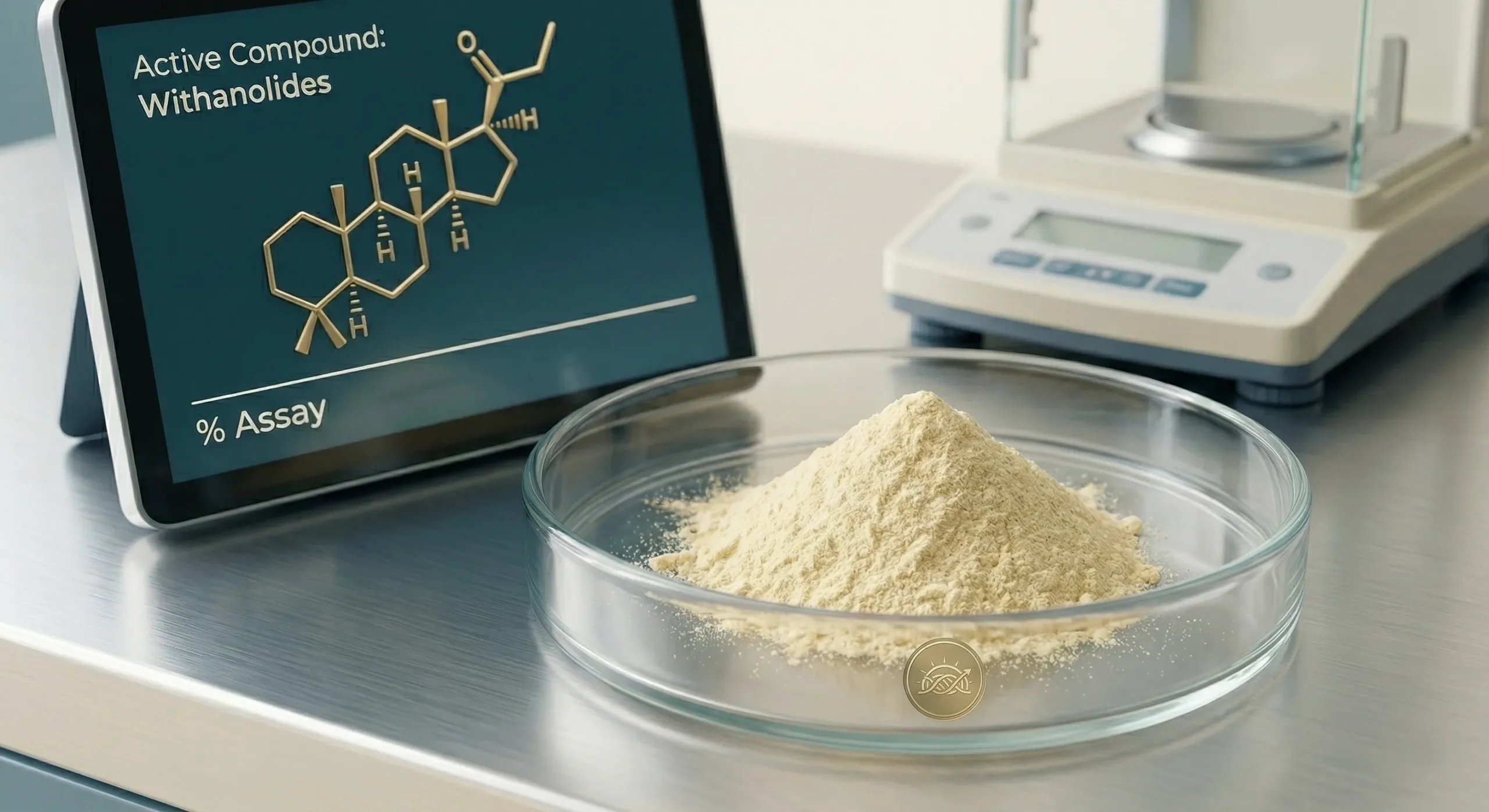
The root’s primary active compounds — withanolides — interact with your hypothalamic-pituitary-adrenal (HPA) axis, the system that governs your cortisol response. Cortisol is your primary stress hormone, and in most people living with chronic stress, it’s chronically dysregulated.
Ashwagandha doesn’t just suppress cortisol in the moment. It helps recalibrate the entire stress-response system. That’s a biological process. It requires sustained signalling, repeated exposure, and time for your body to adapt at a hormonal and cellular level.
Think of it less like switching off a light and more like slowly adjusting a dimmer — the shift is gradual, cumulative, and real.
The Ashwagandha Timeline: Week by Week
Days 1–7: The Quiet Phase
Don’t expect fireworks in week one. For most people, the first week is uneventful. Behind the scenes, withanolides are beginning to accumulate in your system, and your body is responding to these new inputs — but the changes aren’t perceptible yet.
Some people do report a very subtle sense of calm or slightly improved sleep in the first few days, particularly if they’re highly stress-sensitive. But for the majority, week one is about consistency, not results.
What to do: Take your dose at the same time each day. Don’t second-guess it. Trust the process.
Weeks 2–4: The First Signs
This is where most people start to notice something has shifted — even if they can’t put their finger on exactly what.
Common early signals include:
Less reactive to stress. Situations that would normally send you into overdrive feel slightly more manageable. You might notice you’re not catastrophising as quickly.
Better sleep onset. Falling asleep feels a little easier. Some people report waking up less during the night.
Slightly more stable energy. The afternoon crash may feel less severe. You may not be reaching for your third coffee.
Reduced mental chatter. Anxiety and racing thoughts may begin to quieten.
These early signs are subtle — easy to miss if you’re not paying attention. This is why we recommend keeping a simple journal during your first month. Even short daily notes about your mood, energy, and sleep quality can help you spot patterns your conscious mind might overlook.
Weeks 4–8: Building Momentum
By the end of the first month and into the second, most consistent users report noticeable, undeniable changes.
Research backs this up. Multiple clinical studies have found significant reductions in perceived stress and cortisol levels in participants after 60 days of consistent ashwagandha supplementation. One widely cited study published in the Journal of the American Nutraceutical Association reported a 28% reduction in cortisol and marked improvements in general well-being scores at the eight-week mark.
During this phase, you may experience:
Clearer, more sustained focus throughout the day
Improved mood stability — fewer emotional peaks and crashes
Better recovery from exercise — ashwagandha has well-documented effects on muscle recovery and VO2 max
More consistent sleep — deeper rest and more vivid dreams are commonly reported
Reduced physical symptoms of stress — tension headaches, tight shoulders, and jaw clenching often ease
This is the phase where ashwagandha tends to prove itself. If you were on the fence at week two, week six usually settles it.
Weeks 8–12 and Beyond: Full Integration
By three months, your body has had sufficient time to genuinely adapt to ashwagandha’s effects. The HPA axis has recalibrated. Cortisol rhythms are more balanced. Nervous system regulation has improved at a deeper level.
At this stage, the benefits often become so integrated into your baseline that they feel less like an effect and more like your natural state. You may find yourself thinking: I just feel better — steadier, sharper, more like myself.
For benefits specifically related to physical performance, testosterone support, and thyroid function, research suggests the most meaningful results emerge at the 12-week mark and beyond.
What Affects How Fast Ashwagandha Works?
Not everyone follows the same timeline. Several factors influence how quickly — and how powerfully — you respond.
1. Dosage and Extract Quality
At Swalys, our formulations use clinically standardised extracts — because a supplement that doesn’t deliver what the research promises is just an expensive habit.
The research-backed dosage range is typically 300mg to 600mg of a standardised extract per day. Higher doses aren’t necessarily better; consistency matters more than quantity.
2. Your Starting Stress Levels
People who are under significant chronic stress — elevated baseline cortisol, poor sleep, burnout — often report noticing ashwagandha’s effects sooner, because the gap between their current state and a balanced state is larger. The shift is more perceptible.
If you’re already relatively calm and well-rested, the changes may be subtler and slower to surface.
3. When and How You Take It
Ashwagandha is fat-soluble, which means it’s best absorbed with food — ideally a meal containing some healthy fats. Taking it on an empty stomach can reduce absorption and may cause mild nausea in some people.
Some people prefer splitting the dose: half in the morning for focus and energy support, half in the evening for sleep and recovery. Others take the full dose at night. Experiment to find what suits your body.
4. Lifestyle Factors
Ashwagandha is powerful — but it’s not a substitute for the fundamentals. If you’re sleeping four hours a night, eating poorly, and under relentless stress, ashwagandha will be swimming upstream.
Supplement it alongside consistent sleep, regular movement, adequate protein, and stress management practices. When these basics are in place, ashwagandha’s effects compound meaningfully.
5. Individual Biology
Body weight, metabolic rate, gut health, and genetic variation in hormone sensitivity all influence how you respond to adaptogens. Some people are fast responders. Others need the full 8–12 weeks. Both are completely normal.
What Ashwagandha Is — and Isn’t
It’s worth being clear about what ashwagandha can realistically do, because overpromising does no one any favours.
Ashwagandha has strong clinical evidence for:
Reducing cortisol and perceived stress
Improving sleep quality and onset
Supporting cognitive function and memory
Enhancing physical endurance and muscle recovery
Modulating testosterone and thyroid hormones (particularly in those with deficiencies)
Ashwagandha is not:
A treatment for clinical anxiety disorders or depression
A replacement for medical care
An instant mood booster
If you’re dealing with severe mental health challenges, ashwagandha can be a supportive tool — but please work with a healthcare professional.
When to Reassess
If you’ve been taking a high-quality, standardised ashwagandha supplement consistently for 12 weeks and haven’t noticed any change, it’s worth reviewing:
The product: Is it standardised? What percentage of withanolides is listed?
The dose: Are you in the clinically studied range (300–600mg of extract)?
Timing and absorption: Are you taking it with food?
Lifestyle: Are sleep deprivation or poor nutrition undermining the effects?
Occasionally, some individuals simply don’t respond strongly to ashwagandha. In those cases, other adaptogens — such as rhodiola or eleuthero — may be worth exploring.
A Note on Cycling
Some practitioners recommend cycling ashwagandha — taking it for 8–12 weeks, then taking a 4-week break before resuming. The rationale is to prevent tolerance and allow the HPA axis to reset.
Current research doesn’t conclusively support or rule out the need for cycling, and many people take ashwagandha continuously for years without reported issues. If you’re taking it for a specific goal (such as stress during a demanding period), cycling makes practical sense. If you’re taking it for long-term wellness, continuous use with occasional reassessment is also reasonable.
The Swalys Approach
At Swalys, we’re not in the business of overpromising. We’re in the business of giving you tools that actually work — backed by science, made with integrity, and explained honestly.
Ashwagandha, done right, is one of the most evidence-backed natural tools available for managing stress, improving sleep, and supporting resilience. But it requires patience and consistency.
Give it 4 weeks before you assess. Give it 8 weeks before you decide. Give it 12 weeks to see what it’s truly capable of.
Your nervous system didn’t get dysregulated overnight. It won’t be recalibrated overnight either. But it will respond — and Swalys will be with you every step of the way.
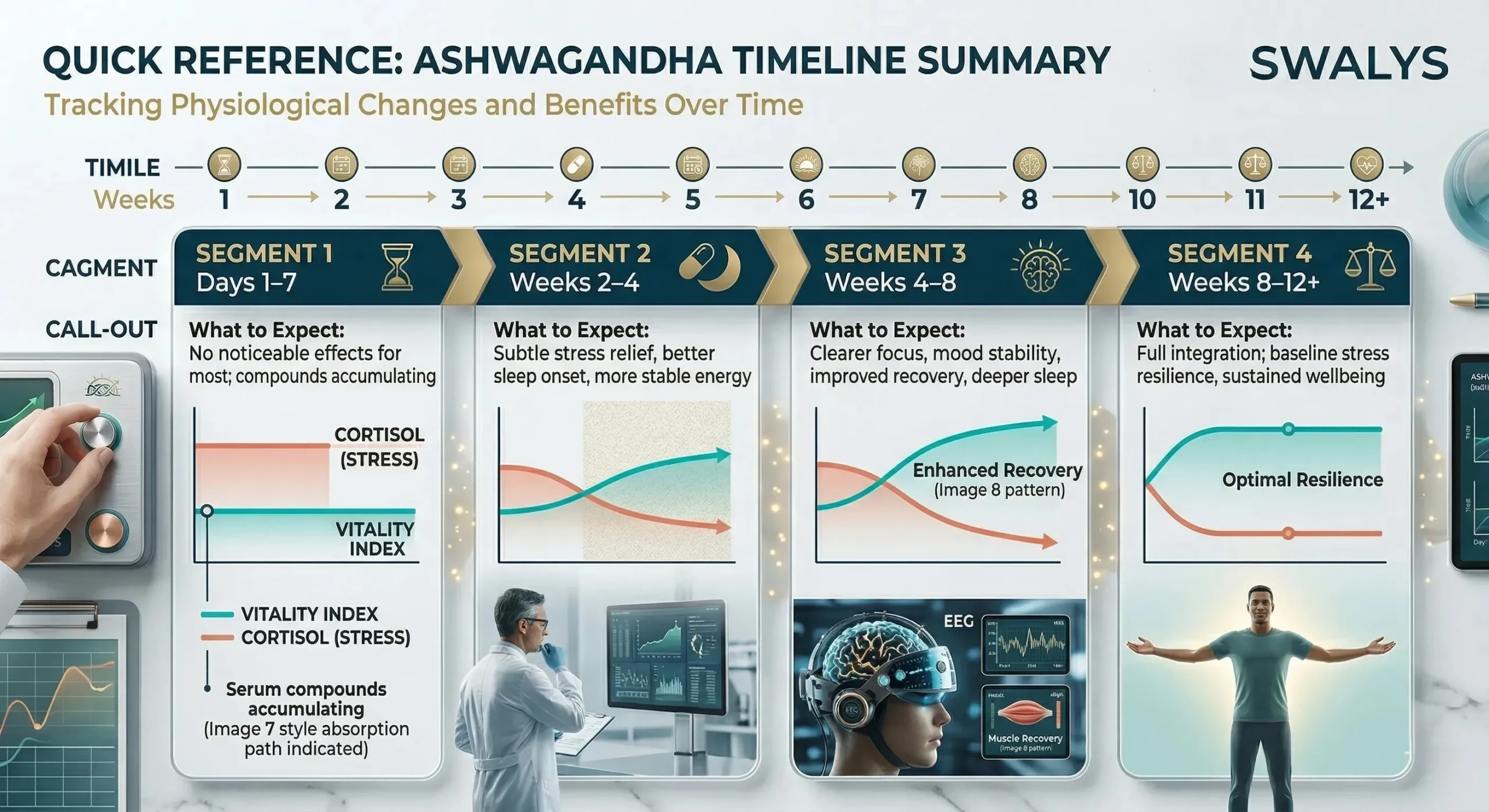
Quick Reference: Ashwagandha Timeline Summary
Timeframe
What to Expect
Days 1–7
No noticeable effects for most; compounds accumulating
Weeks 2–4
Subtle stress relief, better sleep onset, more stable energy
Full integration; baseline stress resilience, sustained wellbeing
Frequently Asked Questions
Can I feel ashwagandha on the first day? A small number of highly stress-sensitive people report a mild calming sensation within the first few days. For most people, day one produces no noticeable effect. This is normal.
What’s the best time of day to take ashwagandha? There’s no single right answer. Morning suits some for focus; evening suits others for sleep support. With food either way for the best absorption.
Can I take ashwagandha every day? Yes. Consistency is key to results. Daily use within the studied dosage range is safe for the vast majority of healthy adults.
Does ashwagandha work better for stress or sleep? Both are well-supported. Cortisol reduction tends to improve both simultaneously — lower daytime stress usually leads to better night-time sleep.
Is ashwagandha safe long-term? Current evidence supports long-term use at normal doses. As always, consult your GP if you’re pregnant, breastfeeding, on medication, or managing a health condition.
This article is for informational purposes only and does not constitute medical advice. Always consult a qualified healthcare professional before beginning any new supplement.
Explore Swalys ashwagandha formulations at swalys.com
 Third-Party Lab Tested for Purity