In today’s fast-paced lifestyle, low energy, fatigue, poor concentration, and weakness are commonly experienced by many people. While stress and poor sleep are often blamed, an essential nutrient deficiency may also be involved. One such important nutrient is Vitamin B12.
Vitamin B12 plays a major role in maintaining overall health. It is needed for energy production, nerve function, brain health, and red blood cell formation. Yet, despite its importance, Vitamin B12 deficiency is commonly seen across the world, especially among vegetarians, older adults, and people with digestive issues.
What Is Vitamin B12?
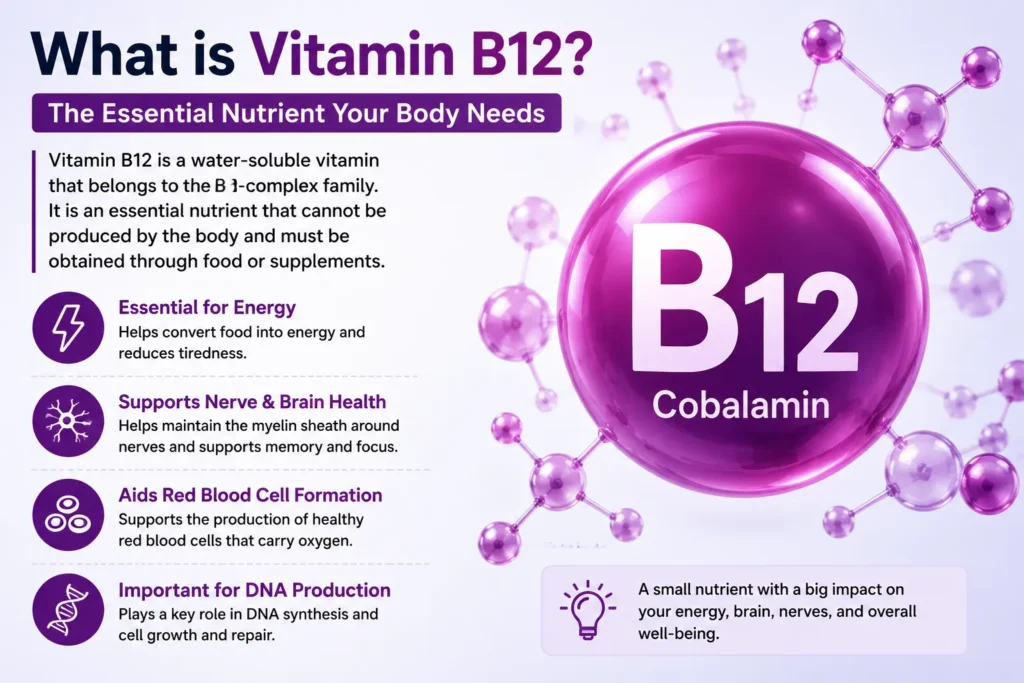
Vitamin B12 is a water-soluble vitamin that belongs to the B-complex family. It is also known as cobalamin. This vitamin is considered essential because it cannot be produced naturally by the human body. Therefore, it must be obtained through food or supplements.
Vitamin B12 is mainly found in animal-based foods such as meat, fish, eggs, and dairy products. Because of this, low Vitamin B12 levels are often observed in vegetarians and vegans.
The nutrient is involved in several important body functions. Healthy nerves are supported by it, DNA production is assisted, and red blood cells are formed with its help.
Why Does Your Body Need Vitamin B12?
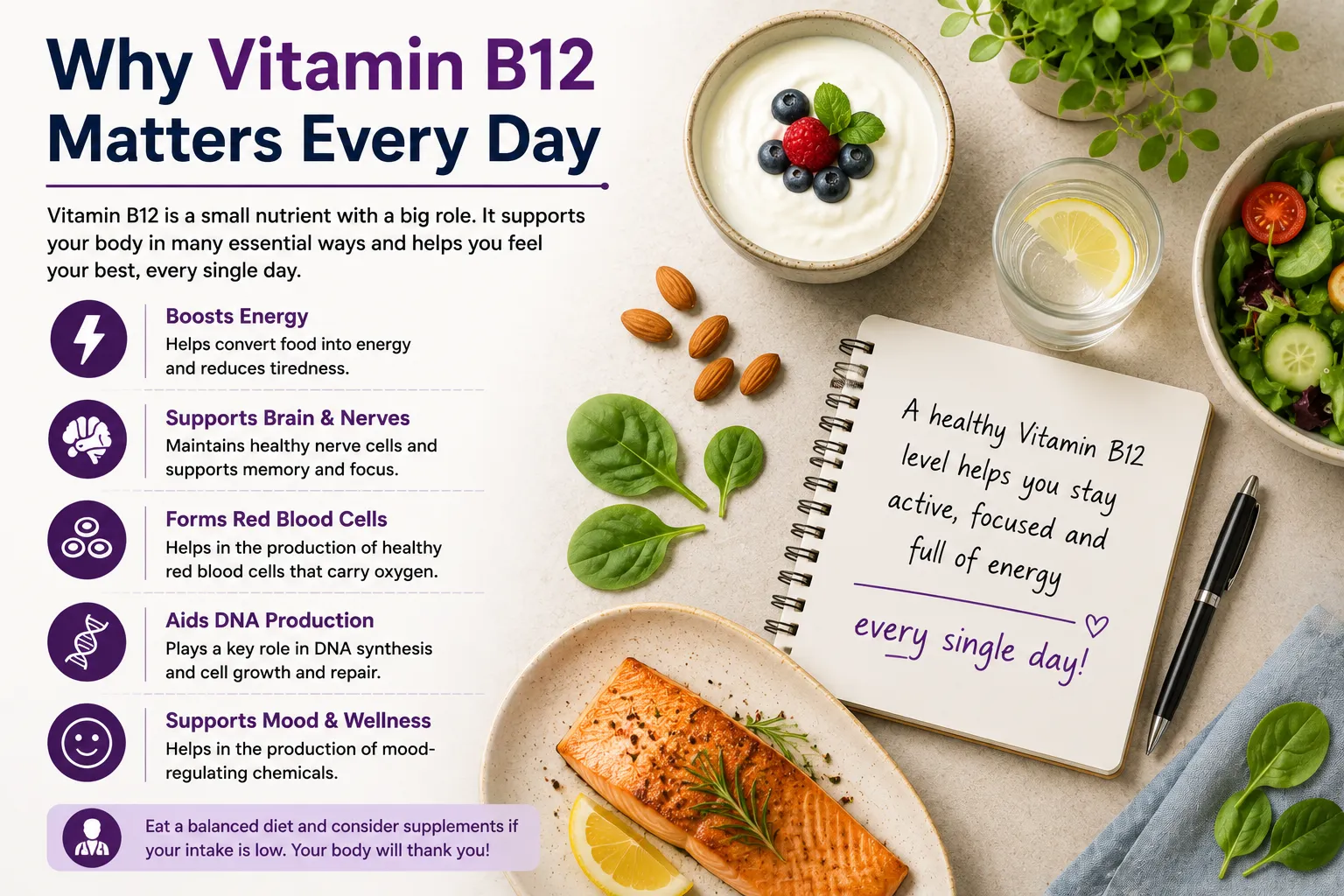
Vitamin B12 is required for many important processes in the body. Without enough Vitamin B12, normal body functions may be affected over time.
1. Energy Production Is Supported
One of the most well-known benefits of Vitamin B12 is its role in energy production. Food consumed by the body is converted into usable energy with the help of B vitamins.
When Vitamin B12 levels become low, tiredness and weakness may be experienced more frequently. Daily activities may feel more exhausting, and energy levels may remain low even after proper rest.
Although Vitamin B12 itself does not directly provide energy, energy metabolism is supported by it.
2. Healthy Red Blood Cells Are Formed
Red blood cells are responsible for carrying oxygen throughout the body. Vitamin B12 is needed for the proper formation of these cells.
When a deficiency occurs, healthy red blood cells may not be produced efficiently. As a result, oxygen transport can be affected. This condition may lead to fatigue, dizziness, pale skin, and shortness of breath.
A type of anemia called megaloblastic anemia is often associated with low Vitamin B12 levels.
3. Brain and Nervous System Function Are Maintained
Vitamin B12 is considered extremely important for the brain and nervous system. Nerve cells are protected by a covering called myelin, and Vitamin B12 helps maintain this protective layer.
When Vitamin B12 deficiency is left untreated, symptoms such as numbness, tingling sensations, memory problems, poor focus, and mood changes may develop.
Mental clarity and cognitive function are also supported by healthy Vitamin B12 levels.
4. DNA Production Is Assisted
DNA is the genetic material present in every cell of the body. Vitamin B12 plays a role in DNA synthesis and cell production.
Because millions of cells are produced daily in the body, proper Vitamin B12 intake is considered necessary for healthy cell growth and repair.
5. Mood and Mental Wellness May Be Supported
Vitamin B12 is also involved in the production of brain chemicals related to mood regulation.
Low levels of Vitamin B12 have been linked with mood imbalance, irritability, and difficulty concentrating. While it should not be viewed as a cure for mental health conditions, overall mental wellness may be supported when healthy nutrient levels are maintained.
Symptoms of Vitamin B12 Deficiency
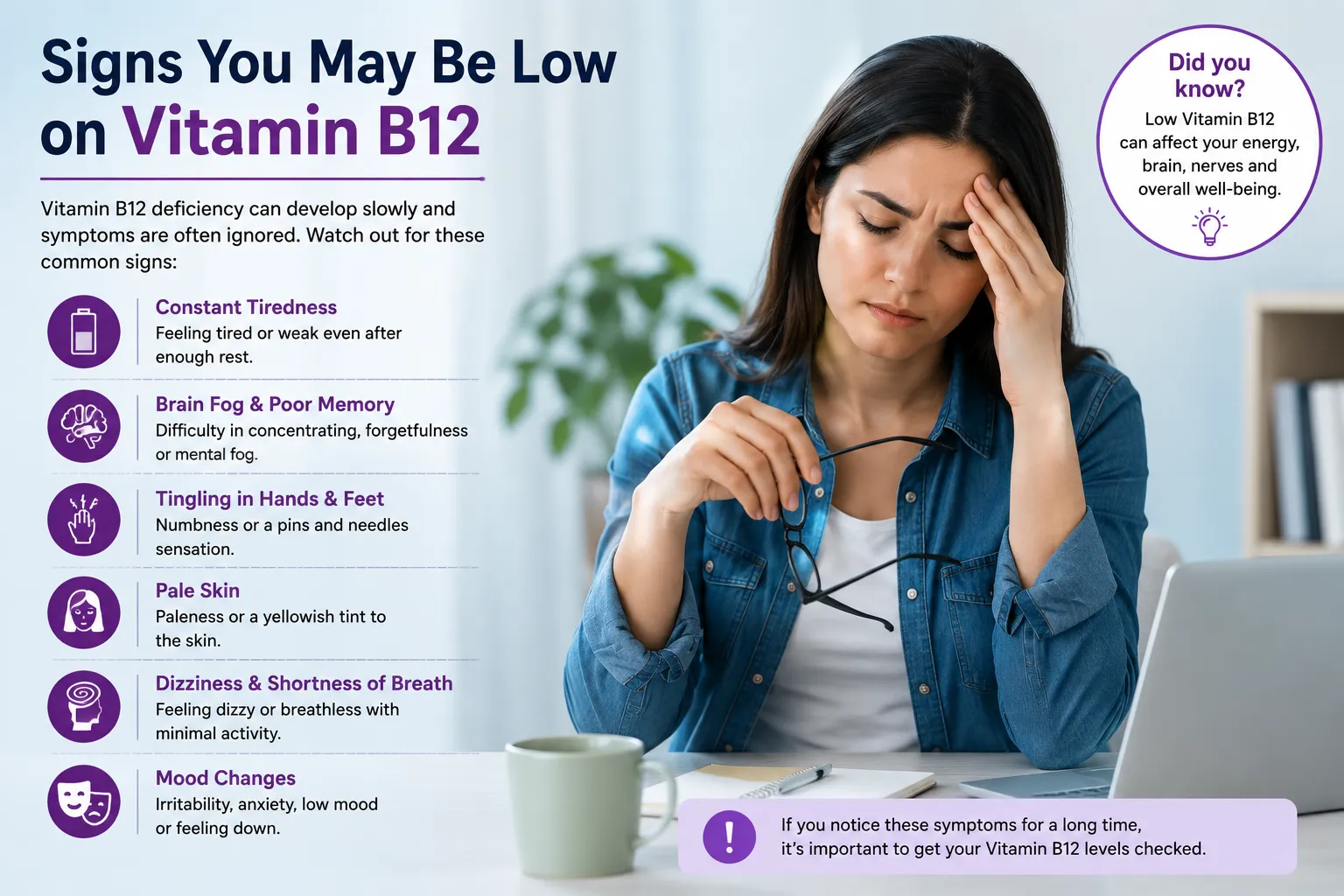
Vitamin B12 deficiency can develop slowly. In many cases, symptoms may be ignored in the beginning.
Some common symptoms include:
Constant tiredness
Weakness
Brain fog
Poor memory
Tingling in hands and feet
Pale skin
Dizziness
Mood changes
Shortness of breath
Difficulty concentrating
If deficiency continues for a long time, nerve damage may occur. Therefore, early attention should be given to symptoms.
Who Is at Risk of Vitamin B12 Deficiency?
Certain groups are more likely to develop Vitamin B12 deficiency.
Vegetarians and Vegans
Since Vitamin B12 is mostly found in animal-based foods, lower intake is commonly seen in vegetarian and vegan diets.
Older Adults
As age increases, Vitamin B12 absorption may decrease naturally. Reduced stomach acid production can affect absorption efficiency.
People With Digestive Issues
Conditions such as Crohn’s disease, celiac disease, or stomach disorders may interfere with nutrient absorption.
Individuals Taking Certain Medications
Some medications used for acidity, diabetes, or digestive issues may reduce Vitamin B12 absorption over time.
Best Food Sources of Vitamin B12
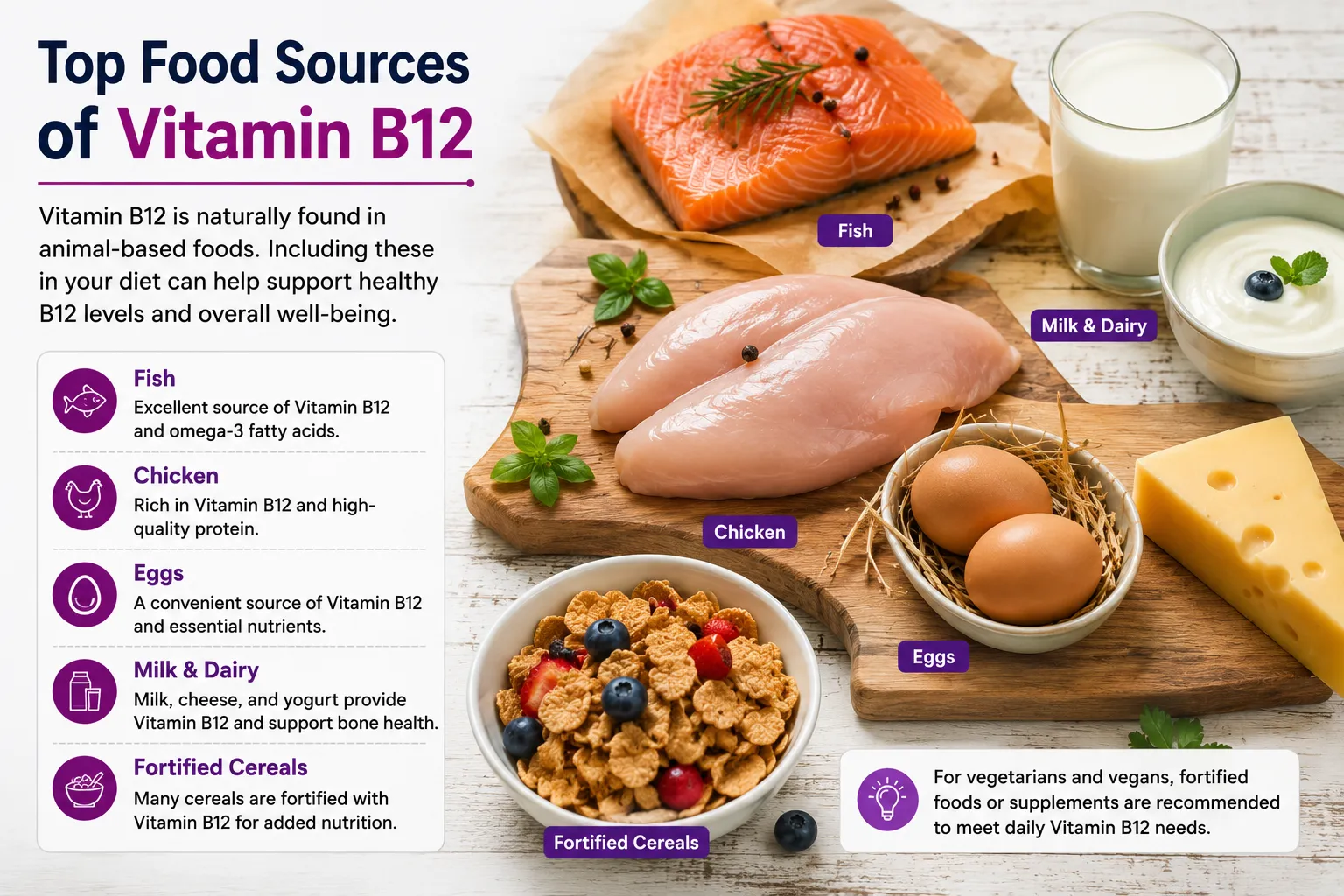
Vitamin B12 is naturally present in several animal-based foods.
Some rich dietary sources include:
Fish
Chicken
Meat
Eggs
Milk
Cheese
Yogurt
Fortified cereals and plant-based foods may also contain added Vitamin B12.
However, people following strict vegetarian diets may still struggle to meet daily requirements through food alone.
Can Vitamin B12 Supplements Help?
Vitamin B12 supplements are widely used today. They are commonly available in capsule, tablet, liquid, and spray forms.
Supplements may help maintain healthy Vitamin B12 levels, especially when dietary intake is low.
Among supplement forms, methylcobalamin is often preferred because it is considered an active and bioavailable form of Vitamin B12.
However, supplementation should ideally be chosen according to individual health needs and nutritional status.
How Much Vitamin B12 Is Needed Daily?
Daily Vitamin B12 requirements may vary depending on age, lifestyle, and health conditions.
For most adults, approximately 2.4 micrograms per day is generally recommended.
Higher intake may sometimes be advised during pregnancy, older age, or deficiency conditions.
Is Too Much Vitamin B12 Harmful?
Vitamin B12 is water-soluble, meaning excess amounts are usually excreted through urine.
In general, Vitamin B12 is considered safe when consumed within recommended limits. However, supplements should still be used responsibly.
Medical advice may be beneficial if long-term supplementation is being considered.
Finally
Vitamin B12 is an essential nutrient that supports energy production, nerve health, brain function, and red blood cell formation. Although only small amounts are needed by the body, its role in overall wellness is extremely important.
Low Vitamin B12 levels may affect physical energy, mental focus, and daily performance. Since deficiency is commonly observed, especially among vegetarians and older adults, proper attention should be given to dietary intake.
A balanced diet, healthy lifestyle, and appropriate supplementation when necessary can help maintain optimal Vitamin B12 levels and support long-term health.
By understanding the importance of Vitamin B12, better health decisions can be made for both body and mind.
 Third-Party Lab Tested for Purity